SQUARE TRANSACTIONS, 2025
Designing for real-world vendors
TYPE
Academic Project
DURATION
7 weeks
MY ROLE
UI Design & User Testing
TOOLS
Figma
THE CHALLENGE
Selling Shouldn't Be This Hard
Through market visits and vendor conversations, we discovered a consistent pattern: Square's inventory-first approach doesn't match how casual vendors actually work.
THE SOLUTION
A Faster, Smarter Transactions System
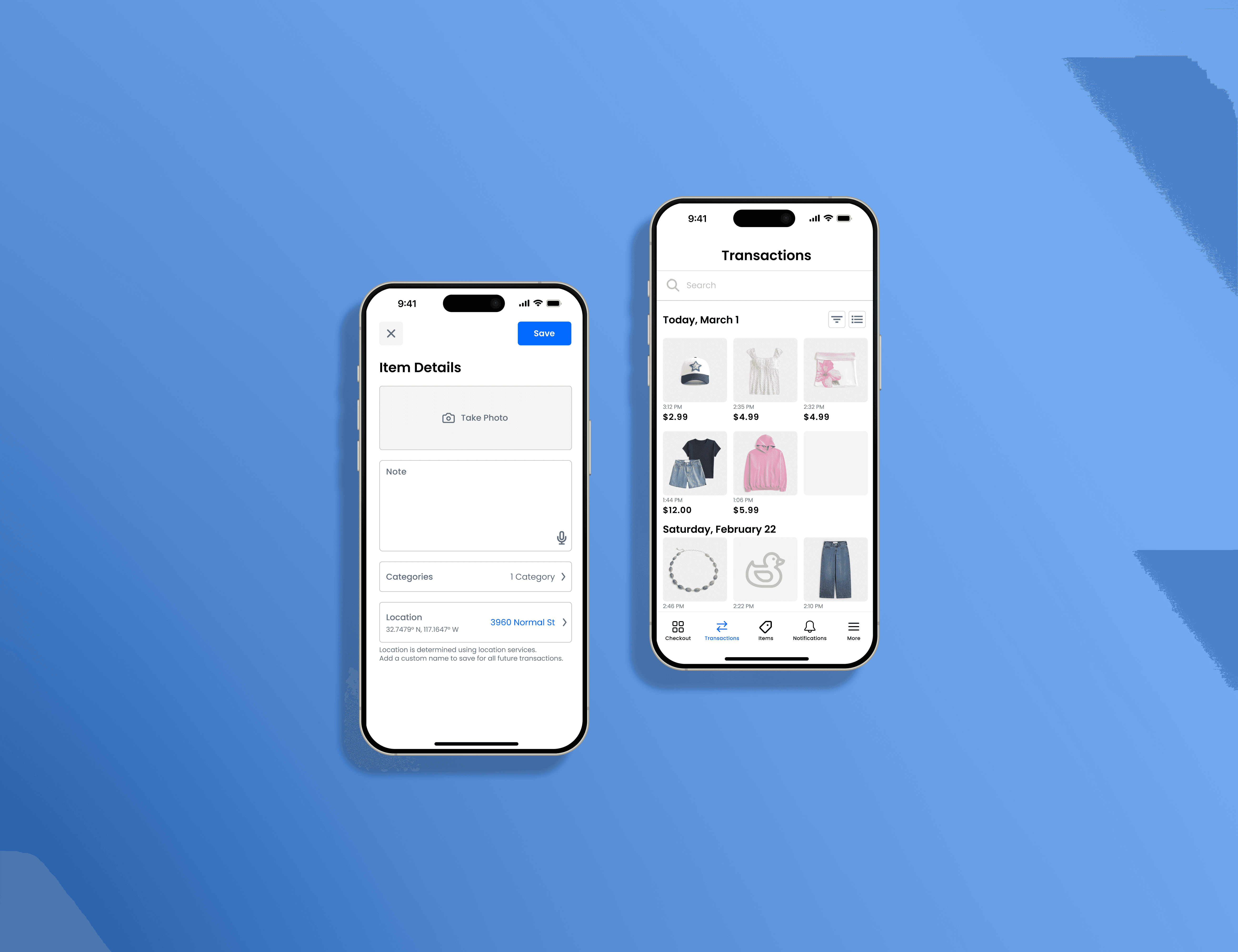
We designed an add-on feature for Square that lets vendors track sales in real-time with zero setup required.
Track
Quickly record sales as they happen without inventory input.
Detail
Add photos, notes, and tag each sale by category and location.
View
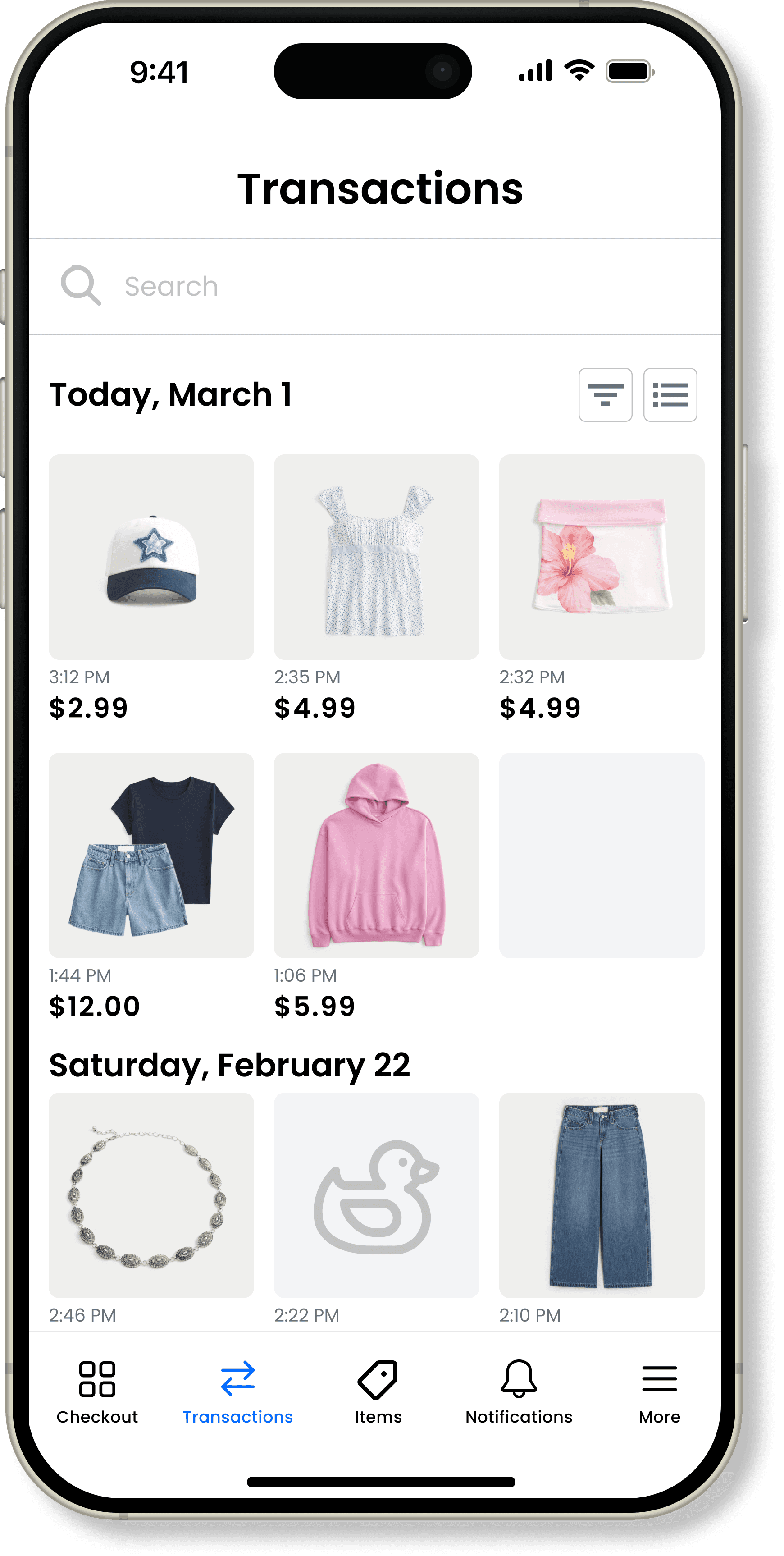
Browse past transactions in a sortable, filterable list or grid.
KEY FEATURES
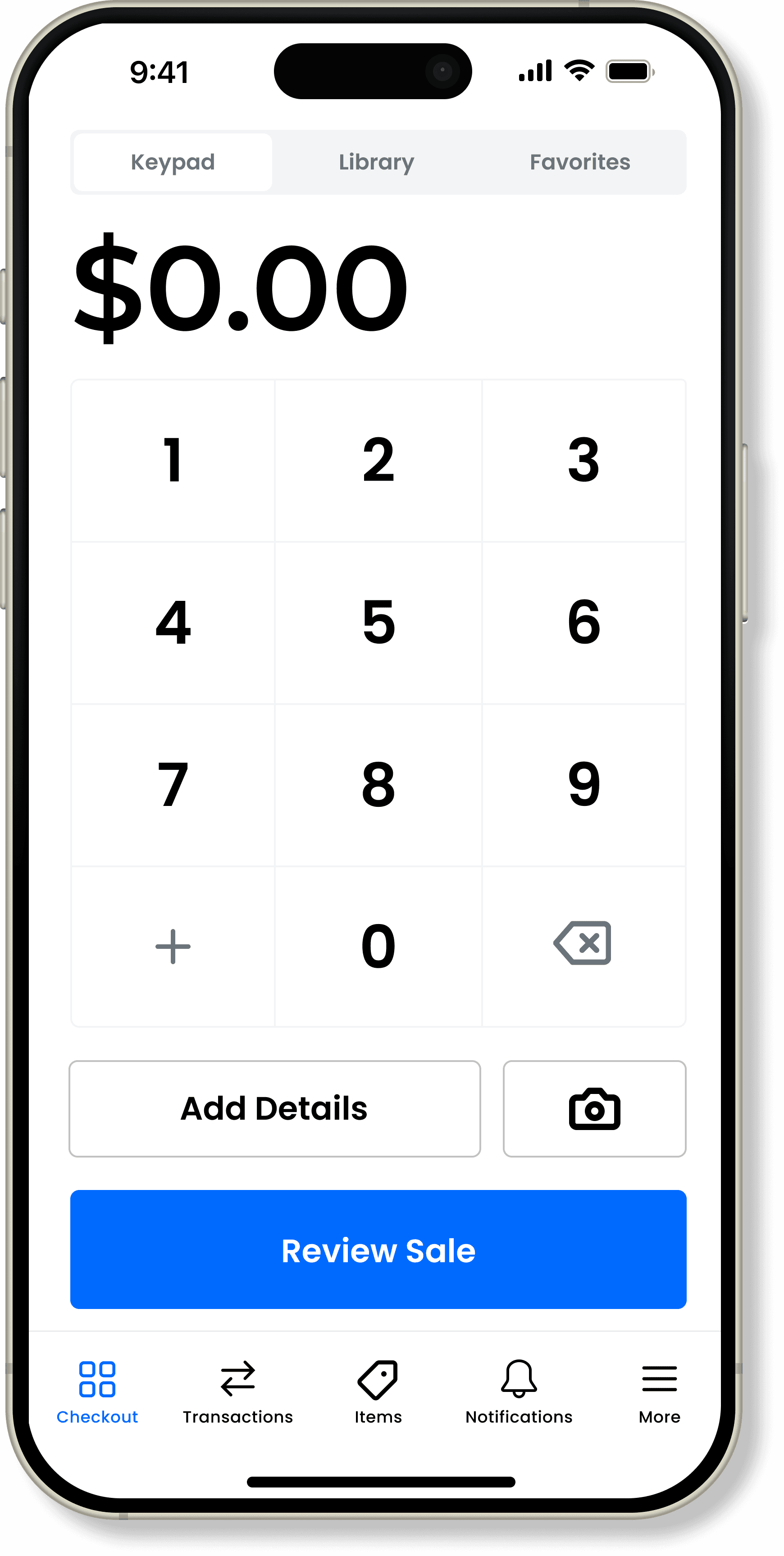
Log Sales Instantly
From the existing Checkout screen, vendors can record each transaction as it happens, no inventory database needed.
Leave a Note
Add custom notes to each transaction. Use text-to-speech for hands-free input!
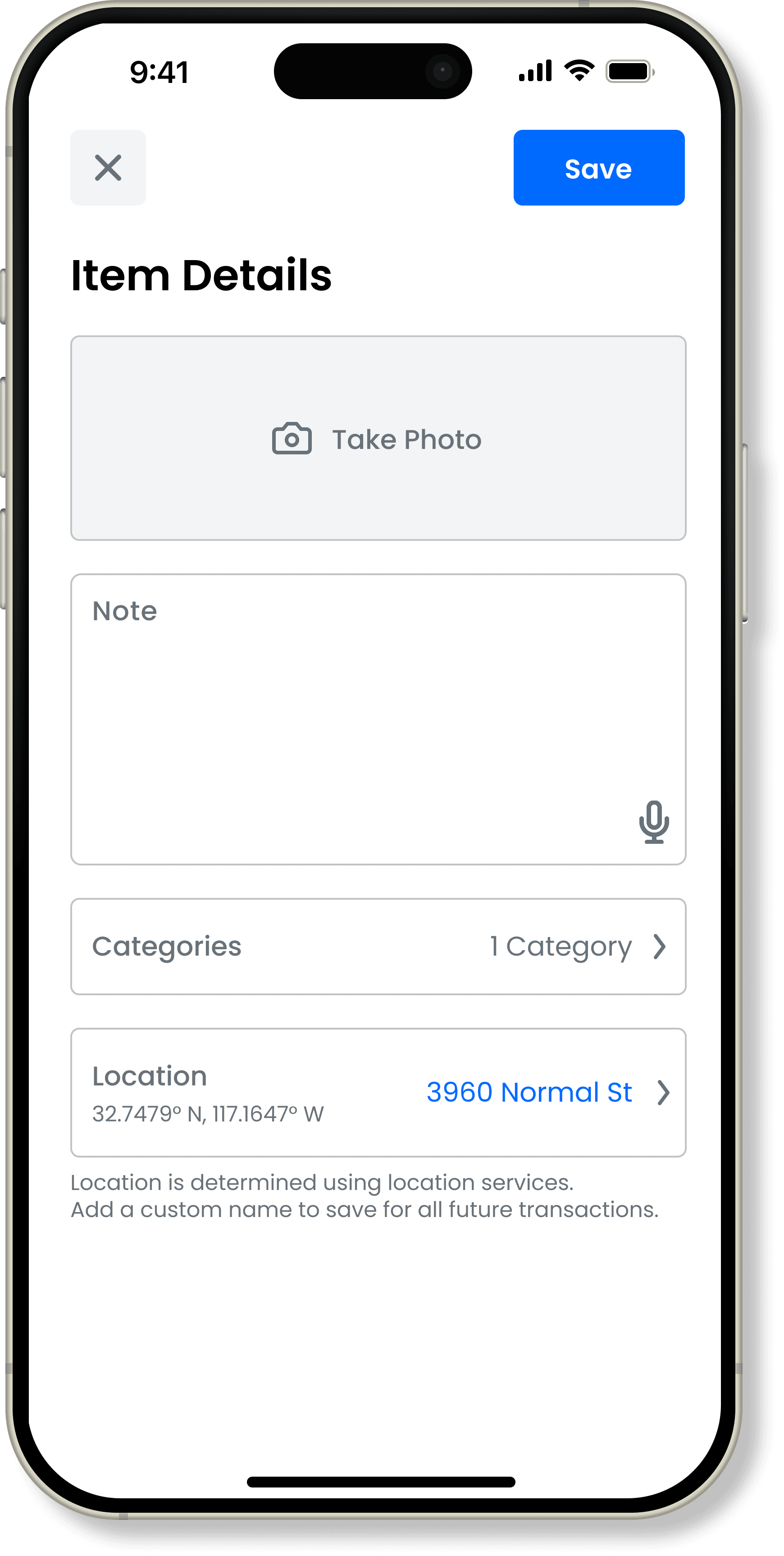
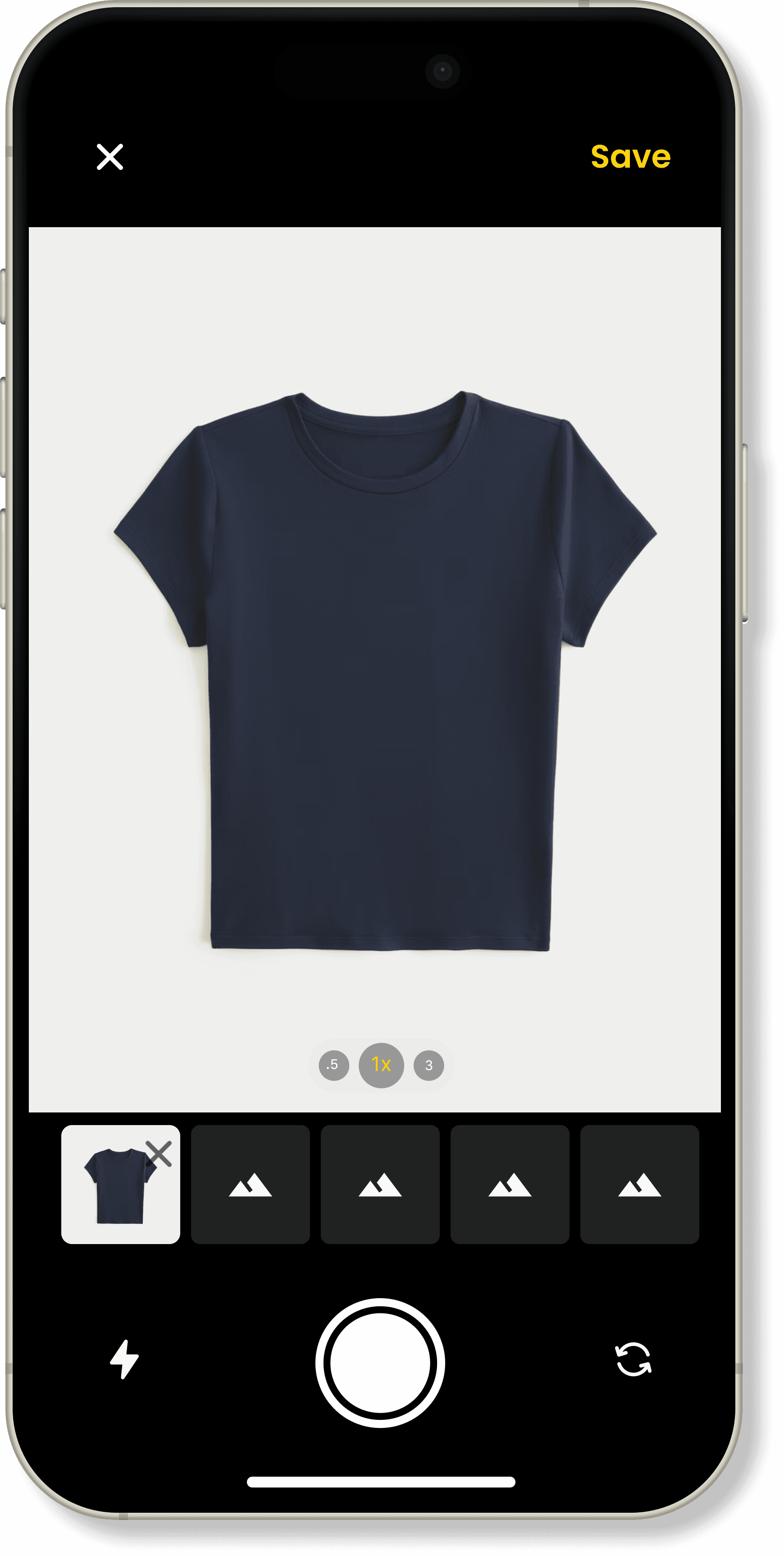
Attach Photos
Snap one or multiple images to visually document the item.
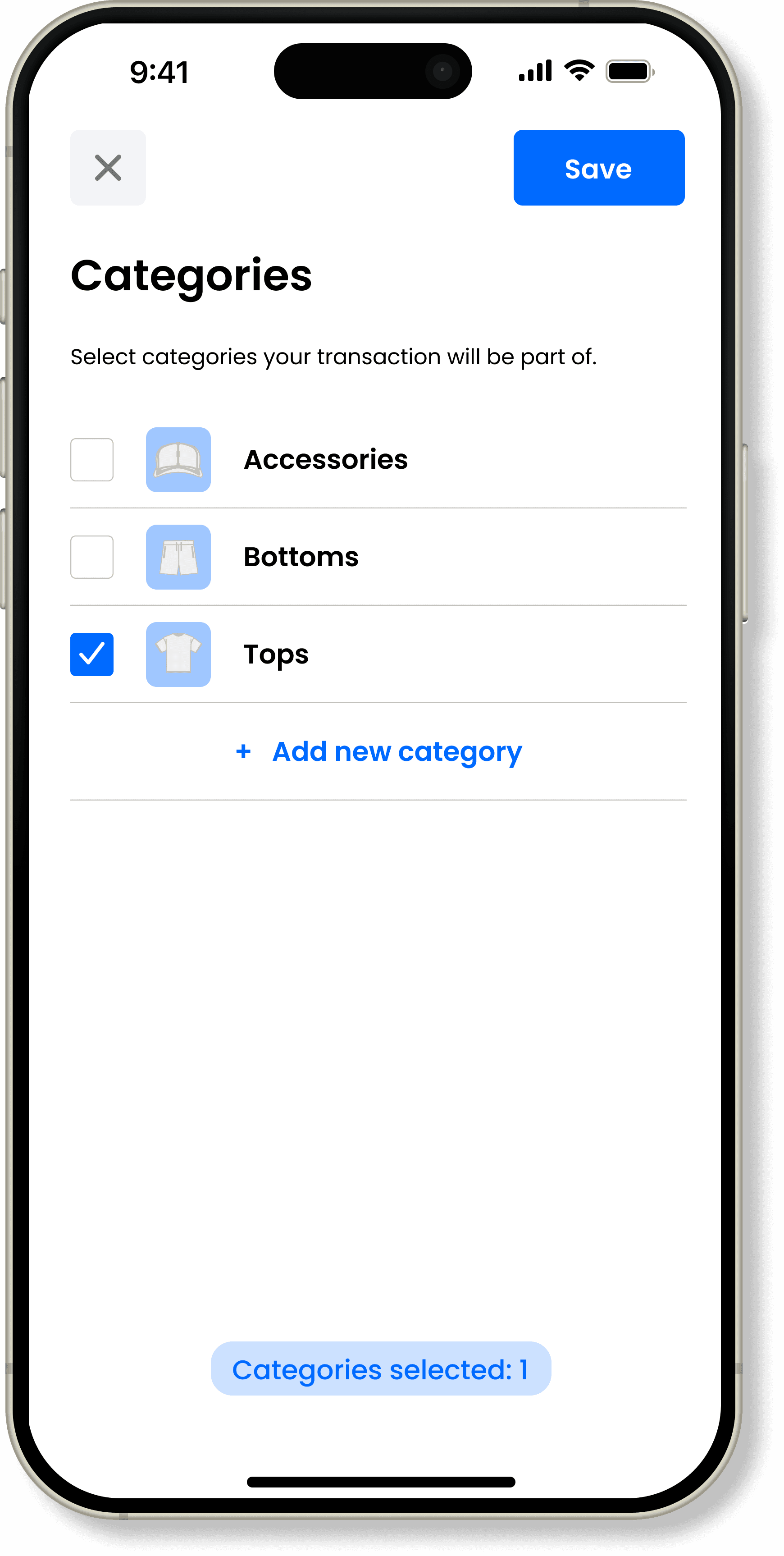
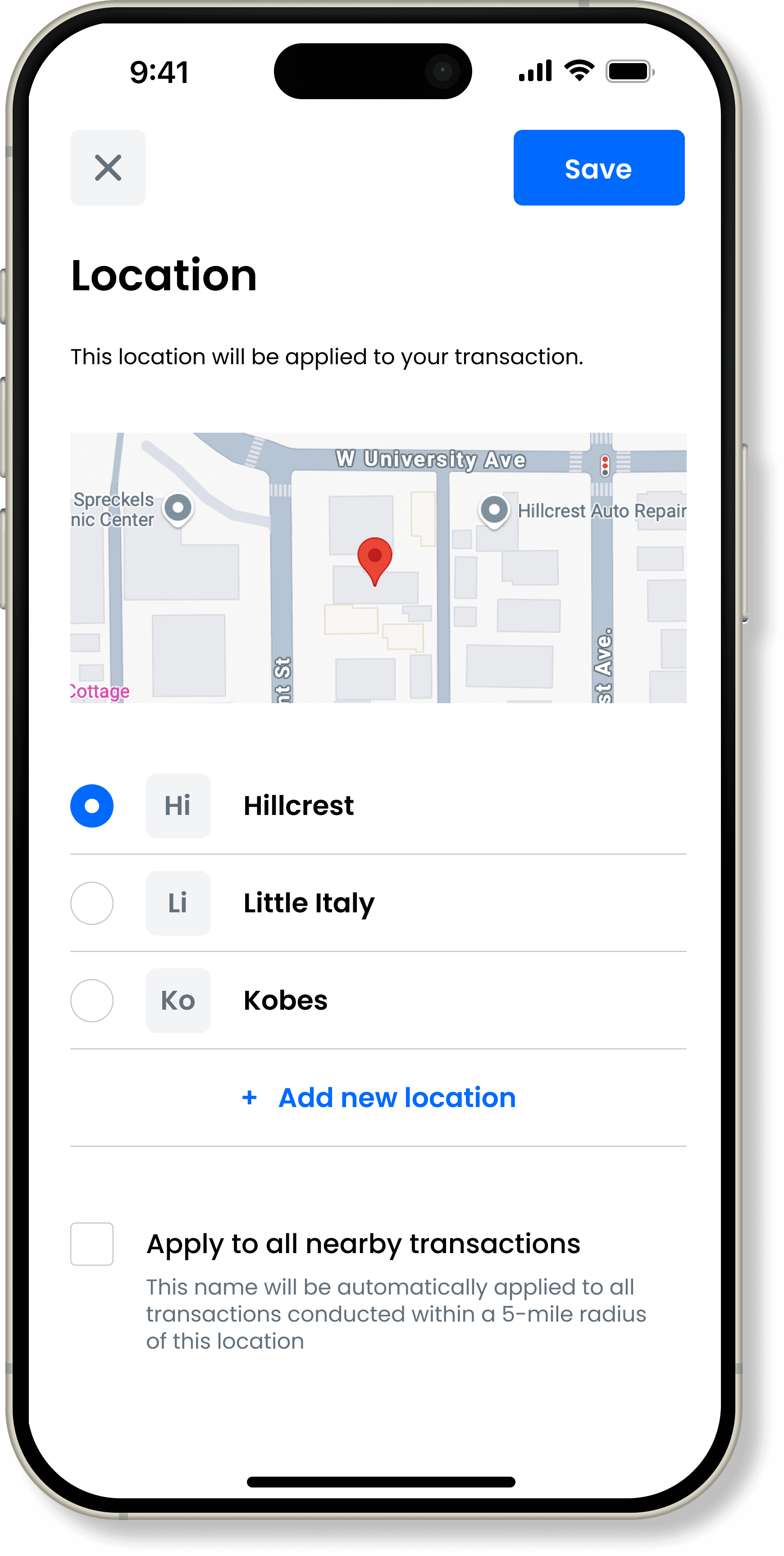
Tag by Category & Market
Track patterns by labeling each transaction by item type (e.g., "shirts) and market location.
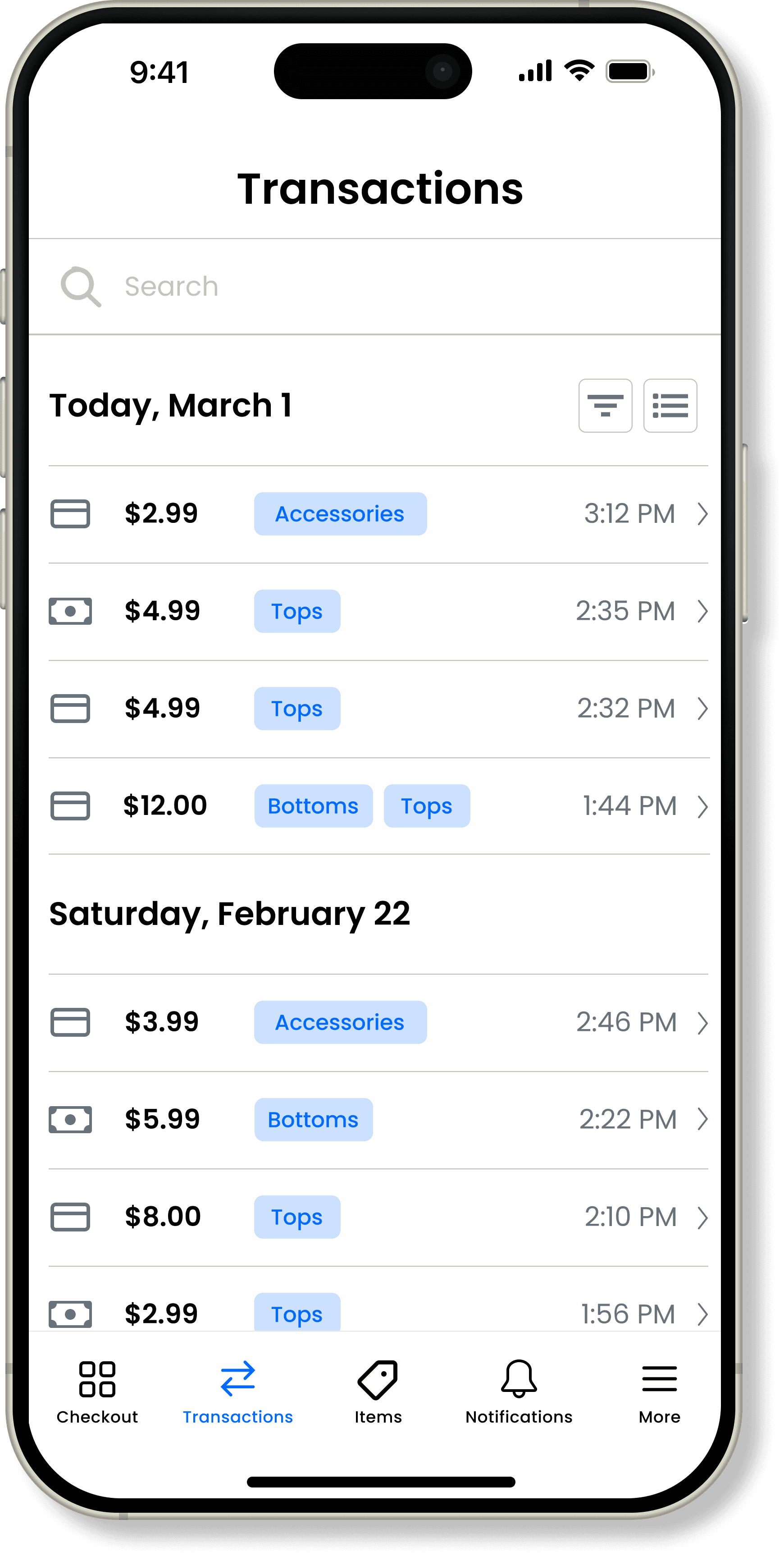
Review & Analyze
View transaction history in a sortable, filterable grid or list. Filter by date, category, market, or price range to spot trends and plan inventory.
RESEARCH
Small Vendors Need a Faster, Simpler Way to Track Sales
To better understand the needs of small vendors, we visited three markets across San Diego and interviewed 6 vendors, ranging from food to crafts.
“My inventory changes every week, so logging inventory is not really worth my time.”
- Food Vendor, Hillcrest Farmers Market
"Prices depend on the crowd and vibe. Honestly, sometimes I just make it up on the spot.”
- Clothing Vendor, Hot Spot Flea Market
“I like organizing items by type and by which market I'm at. It helps prep for next time.”
- Craft Vendor, UCSD Vendor Fair
INSIGHTS
Speed Over Structure
Vendors track sales over inventory
Price flexibility is needed
Organization matters
Photos are useful, but limited
COMPETITIVE ANALYSIS
Existing POS Systems Aren't Optimized for Casual, In-Person Selling

Square
Widely used and easy to set up, but offers limited flexibility for on-the-fly sales.

Shopify POS
Robust for established businesses, but overly complex.

Venmo
Extremely fast but zero organizational or tracking features.

Photos/Notes App
Quick and visual, but impossible to sort, filter, and analyze later.
EARLY ITERATIONS
Adapting Tools to How Vendors Actually Work
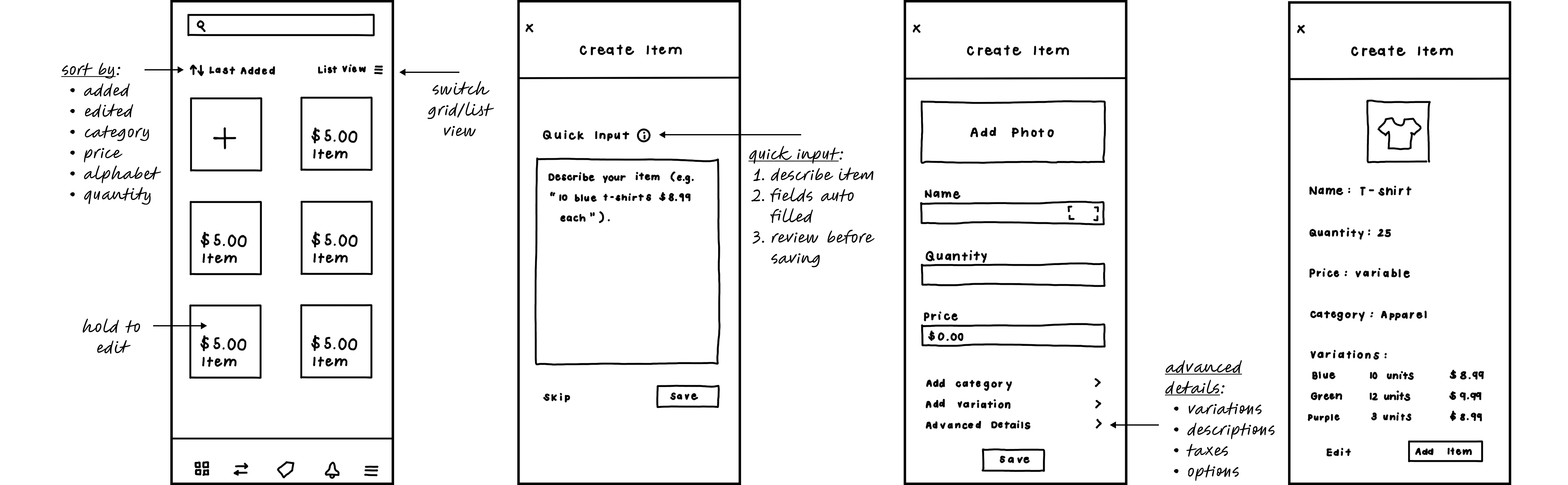
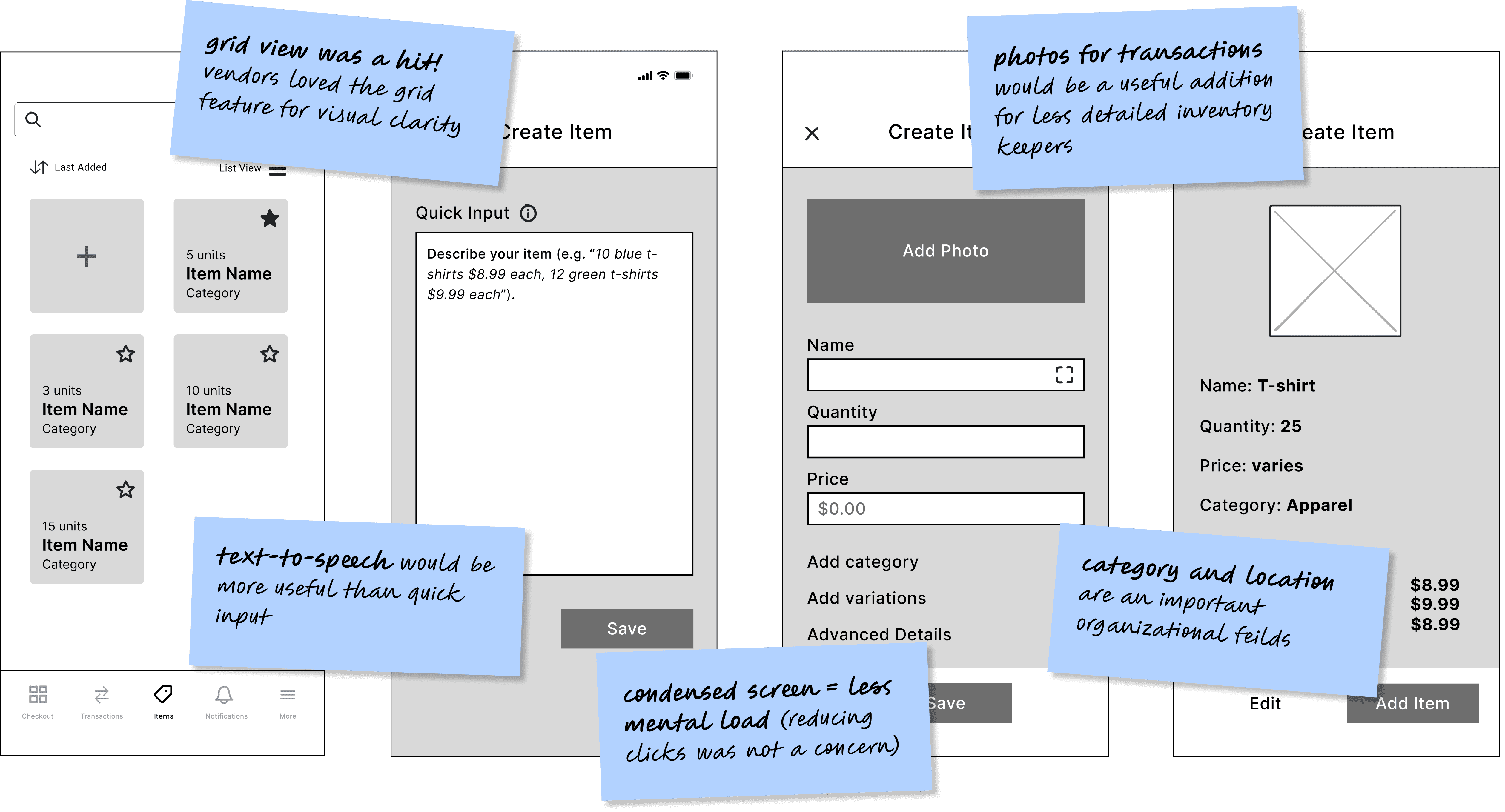
Low-Fidelity Wireframes
We began improving the Inventory feature. Although vendors appreciated some features, they were hesitant to rely on pre-logging inventory at all.
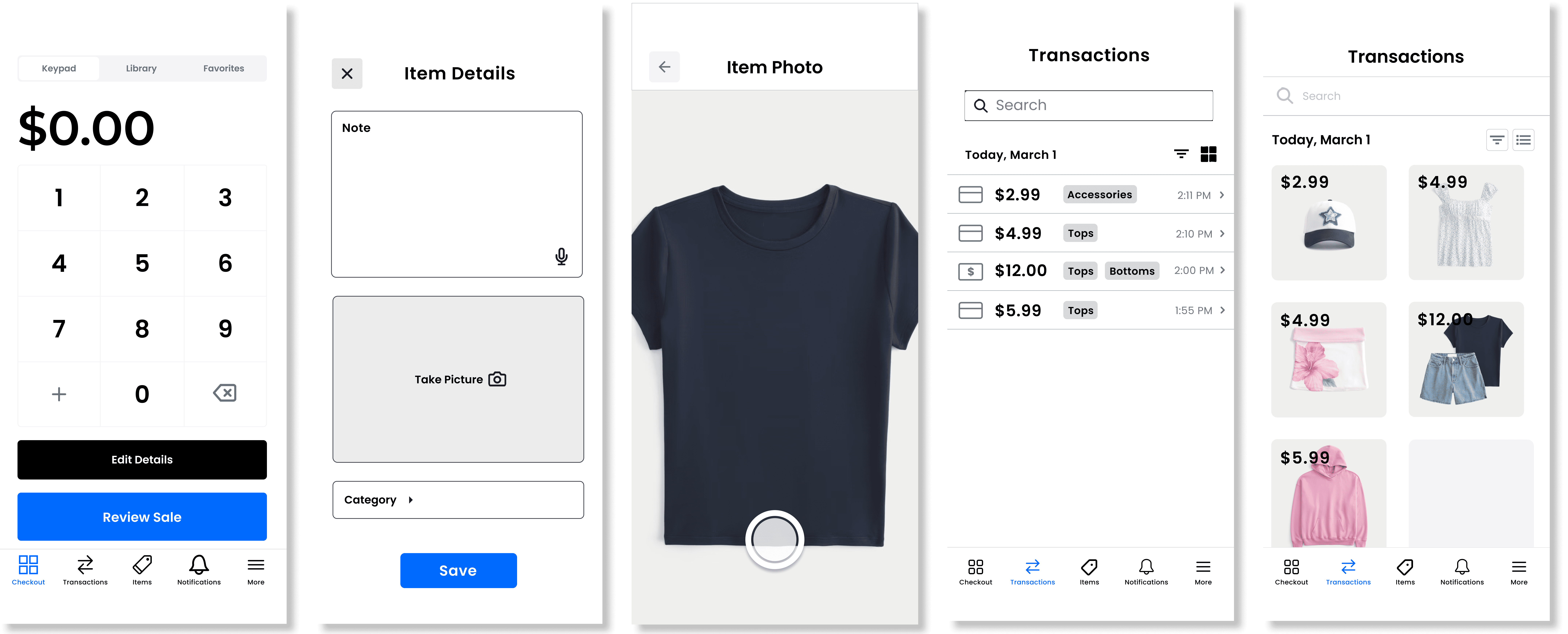
High-Fidelity Pivot
We shifted focus from inventory to Transactions, designing a lightweight feature vendors could easily incorporate into their workflows without any extra set up.
TESTING & IMPROVEMENTS
Cutting the Clutter, Increasing the Flexibility
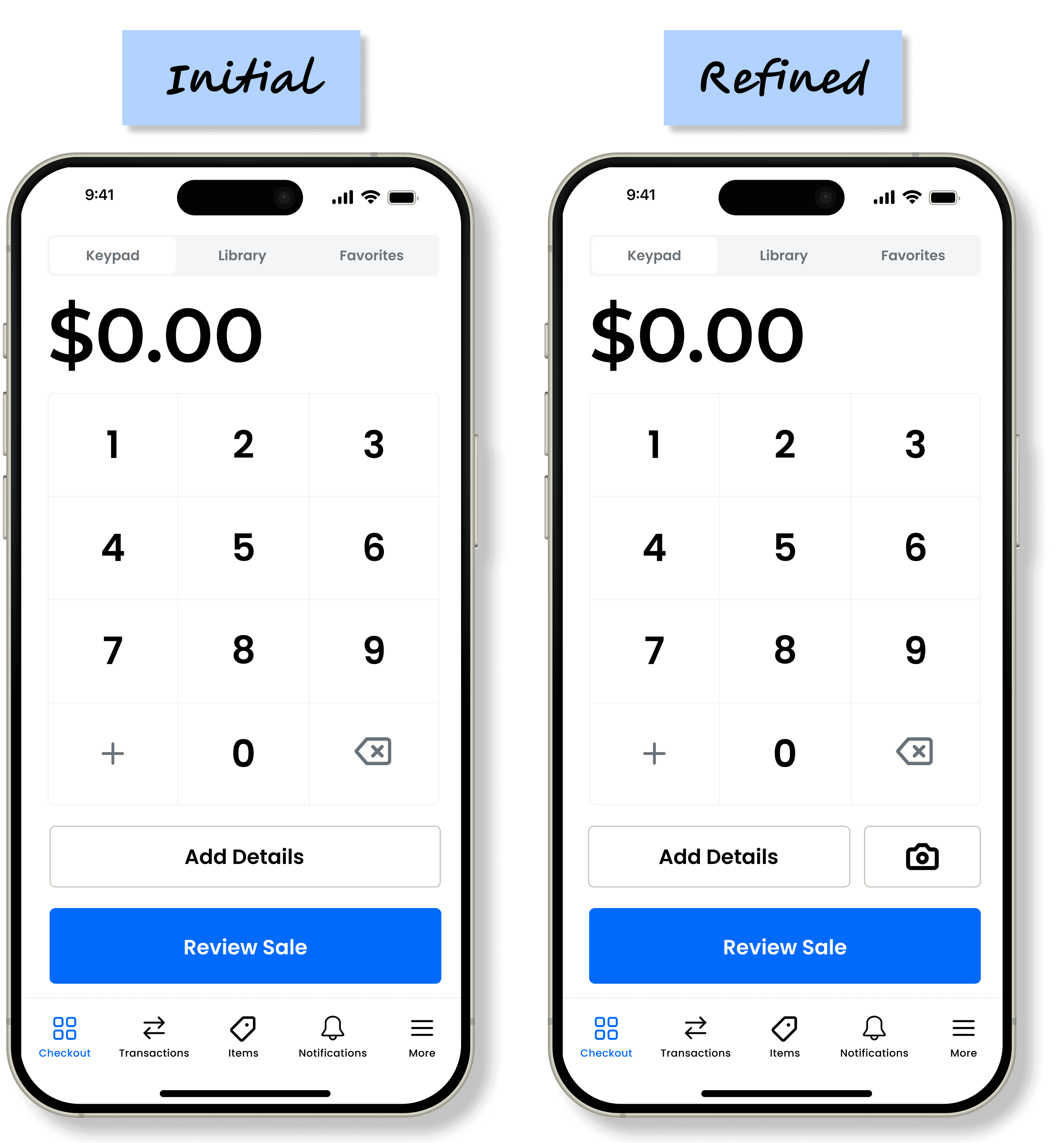
Simplified the Checkout
Early versions required too many clicks to add common details like photos or notes.
We added a customizable shortcut button next to "Add Details," so users can quickly log their most used input without extra navigation.
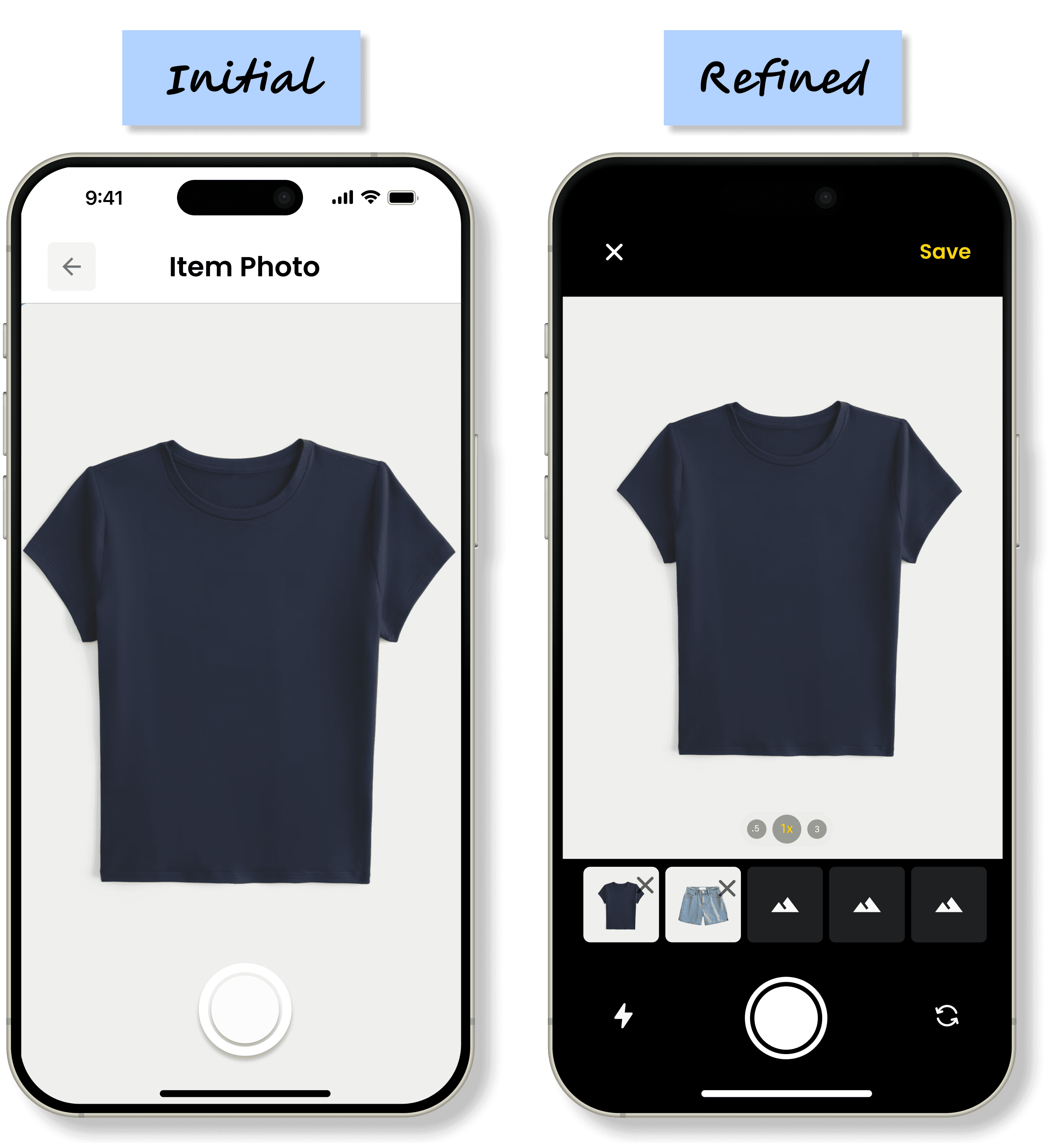
More Photos, Better Functionality
Users could only upload one photo, which was limiting for bundles or detailed items.
We updated the feature to support multiple photos, and also added essential camera functions like flash and zoom.
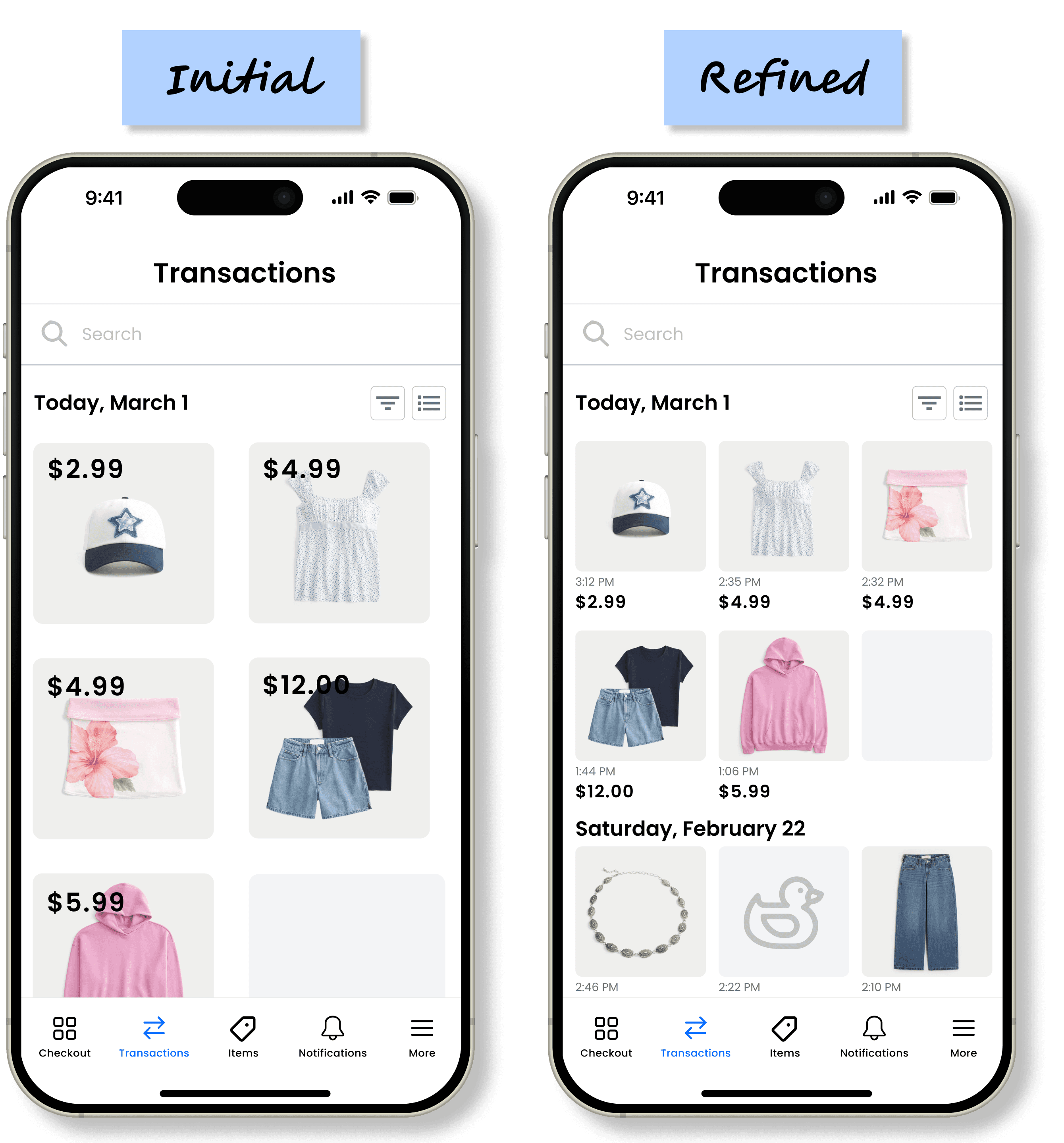
Clarified the Grid View
The original grid only showed prices over photos, cluttering the view and reducing readability.
We added a cleaner price placement with timestamps, and reduced photo size to fit more transactions on-screen without excessive scrolling.
REFLECTION
Real People Lead to Real Insights
Assumptions ≠ Reality: What we initially thought vendors needed wasn't actually what mattered most.
Testing > Guessing: User feedback saved us from building the wrong solution and allowed us to move towards a more effective one.
Iteration 🔛🔝: Pivoting mid-project actually led us to a more valuable end result.
Next Steps: If given the opportunity, we would test at scale, track vendor adoption, and continue refining features based on ongoing feedback.